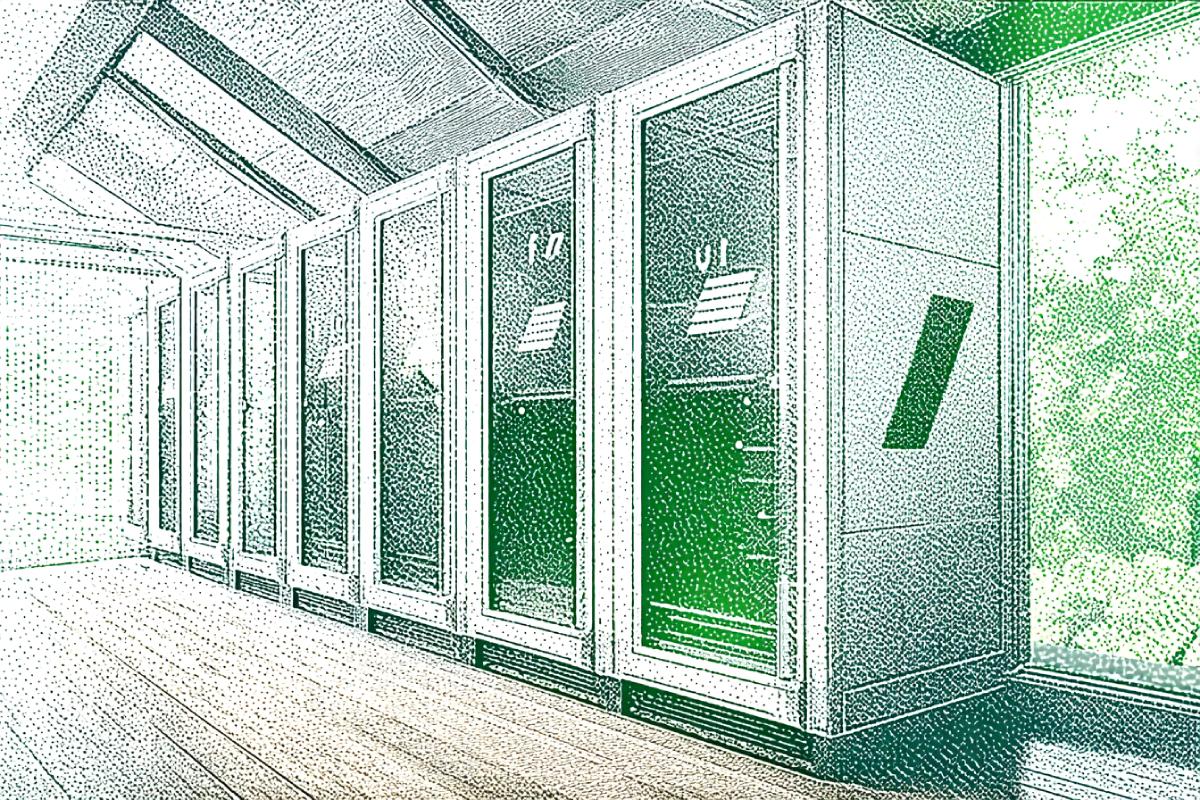
A data center is a secured facility that houses the servers, storage, and network gear your software runs on, with redundant power, cooling, and connectivity so it stays online. For a tax or accounting firm, the data center behind your hosting is where client returns and Social Security numbers physically live. Its certifications are part of your own compliance story.
Key takeaways
- A real data center adds redundant power, cooling, physical security, and network paths that an office closet cannot.
- Data center tiers (I to IV) describe redundancy; Tier III and up target 99.98% uptime or better.
- SOC 2 Type II is the audit to look for, because it verifies security controls over time.
- Under IRS Pub 4557 and FTC Safeguards, you stay responsible for client data wherever it is hosted.
- Verito runs dedicated private servers in SOC 2 audited data centers, 100% uptime since 2016.
What is a data center?
A data center is a purpose-built facility that houses servers, storage, and networking, along with the power, cooling, and security systems that keep that hardware running without interruption. When your firm uses cloud hosting, your software runs on servers inside a data center rather than on a machine in your office.
The value is everything wrapped around the hardware. Backup power so an outage does not take you down. Climate control so equipment does not overheat. Physical access controls so no unauthorized person can touch the machines. Redundant internet connections so one cut line does not cut you off. A server in an office closet has none of that.
What are data center tiers?
Data center tiers are an industry rating from Tier I to Tier IV, defined by the Uptime Institute, that describe how much redundancy a facility has and how much uptime it can sustain. Higher tiers tolerate more component failures without going down. For a firm, the point is simple: no single failure should take your data offline.
| Tier | Redundancy | Approx. availability | Downtime per year |
|---|---|---|---|
| Tier I | Basic, no redundancy | ~99.671% | Up to ~28.8 hours |
| Tier II | Some redundant parts | ~99.741% | Up to ~22 hours |
| Tier III | Concurrently maintainable | ~99.982% | Up to ~1.6 hours |
| Tier IV | Fault tolerant | ~99.995% | Up to ~26 minutes |
What makes a data center secure and compliant for an accounting firm?
A serious data center is independently audited and built with no single point of failure. The marker to look for is a SOC 2 Type II report, which means a third party verified the facility’s security controls over time. Add redundant power, cooling, and network paths, physical access control, and encryption of the data itself.
The pieces that matter for a firm holding taxpayer data:
- Independent audit: a SOC 2 Type II report, verified over a period, not a one-time check.
- Physical security: controlled entry, surveillance, and access logging.
- Redundant power: battery plus generator backup, rated N+1 or better.
- Redundant cooling and network: no single failure should take the facility down.
- Encryption and access control on the data, in transit and at rest.
Why does the data center matter for IRS and FTC compliance?
Because under IRS Publication 4557 and the FTC Safeguards Rule, your firm stays responsible for protecting client data wherever it lives, including a third party’s data center. You cannot outsource the obligation, but an audited facility gives you evidence you can point to when you have to prove that protection.
IRS Publication 4557 directs firms to safeguard taxpayer data with documented controls. The FTC Safeguards Rule (16 CFR Part 314) adds oversight of the service providers that hold your data. When an examiner or underwriter asks where data resides, “in a SOC 2 audited data center, on a private server, encrypted” is the answer that holds up.
“The data security Verito provides is immense; it ensures my tax data is secure, eliminating worries about hackers, natural disasters, or computer crashes, offering immense peace of mind.”
Robin R., Owner, Robin M Rudisill CPA PC · G2, Oct 2025
Data center vs. a server in your office: which is safer?
A professional data center beats an office server on every resilience measure: redundant power and cooling, controlled physical access, redundant network, and an independent SOC 2 audit. An office closet depends on one power feed, office HVAC, and a door lock. For client financial data, that gap is the whole argument.
| Factor | Office server / closet | Professional data center |
|---|---|---|
| Power | One utility feed | Battery plus generator |
| Cooling | Office HVAC | Redundant climate control |
| Physical security | Office lock | Access control, surveillance |
| Network | Single business line | Redundant connectivity |
| Independent audit | None | SOC 2 Type II |
| Disaster exposure | One location, one fate | Redundancy plus offsite backup |
What should you ask a host about their data center?
Ask where the facility is, whether it is SOC 2 audited, how power, cooling, and network are made redundant, whether your server is shared or dedicated, and how backups are stored and tested. A host that cannot answer those plainly is telling you something. A serious provider answers without hedging.
| Ask this | A good answer sounds like |
|---|---|
| Where is the data center? | A specific facility, not “the cloud” |
| Is it independently audited? | SOC 2 Type II, available on request |
| How is power made redundant? | Battery plus generator, N+1 or better |
| Is my server shared or dedicated? | Dedicated and isolated to your firm |
| How are backups handled? | Encrypted, offsite, validated on a cadence |
| How fast do I reach a human? | Under 60 seconds, no phone tree |
How is Verito’s infrastructure set up for accounting firms?
Verito runs dedicated private servers inside SOC 2 audited data centers, built so the failures that take other firms offline do not take you offline. The track record is the proof: 100% uptime since 2016, zero ransomware payments across that same span, and roughly 35% faster performance than shared infrastructure.
The combination is what counts for a firm. The data center provides the redundant, audited foundation. The dedicated private server on top keeps your data out of shared space, which keeps your compliance story clean. When something needs attention, a real person answers in under 60 seconds and 92% of issues resolve on the first touch. To see exactly where your data would live, book a VeritComplete demo.
“I originally switched to Verito from Rightnetworks due to persistent downtime issues.”
April W., Owner, AAA Business Services LLC · G2, Oct 2025